
How Trauma Affects Relationships — And How Couples Can Heal Together
When one or both partners carry unresolved trauma into a relationship, it often shows up in subtle—yet powerful—ways. Trauma isn’t just a memory; it shapes how we perceive safety, trust, and closeness in the present moment. Partners may find themselves reacting to one another through the lens of past pain rather than current intentions (van der Kolk, 2014).
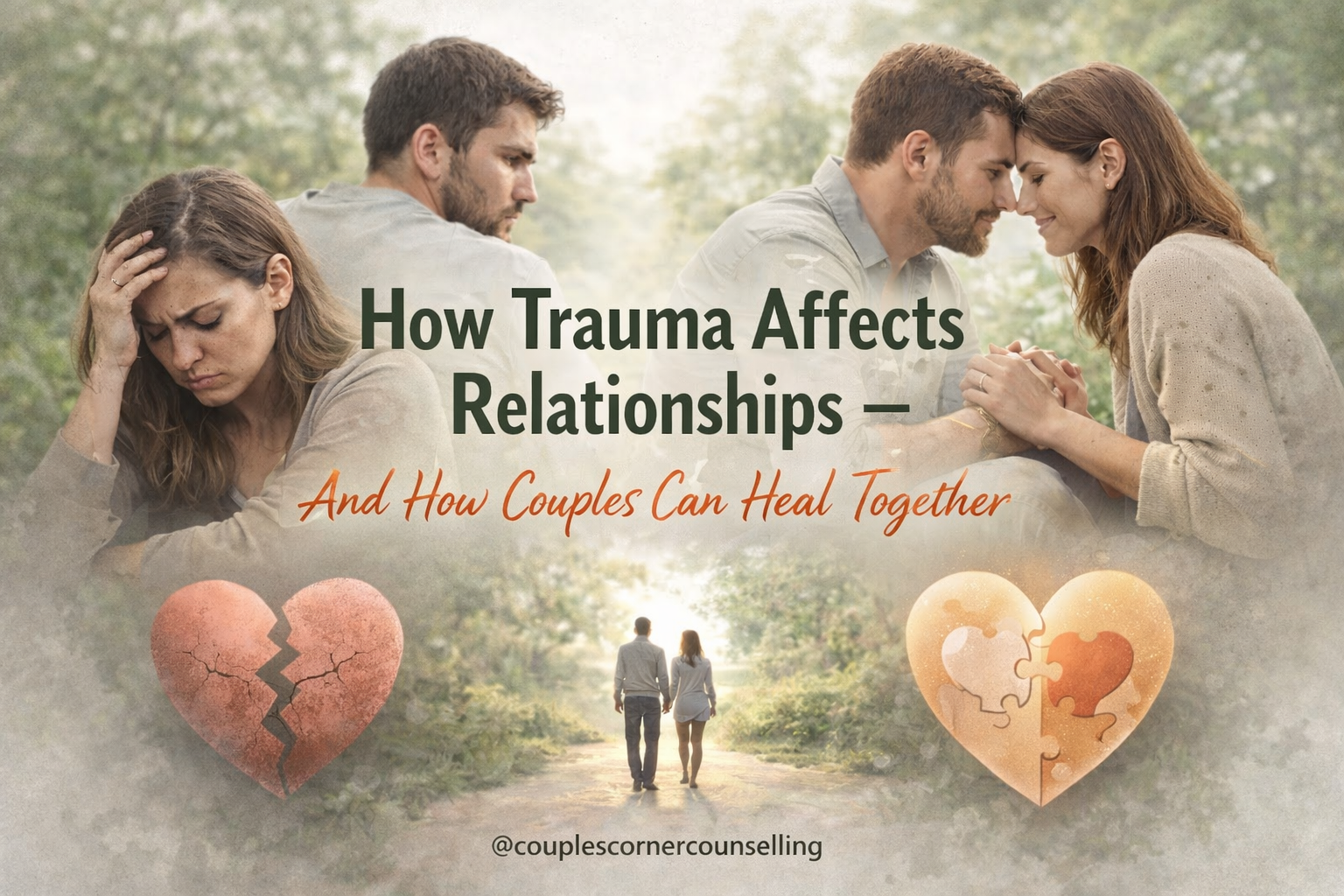
Trauma doesn’t just live in the past—it shapes how we experience safety, trust, and connection today.
How Trauma Manifests in Couple Dynamics
Emotional and relational patterns often shift when trauma is part of the story. Research has shown that trauma can affect several areas of relationship health:
Emotional regulation: Traumatic experiences can make people more sensitive to conflict or perceived rejection, leading to withdrawal or becoming more emtionally reactive (Ford et al., 2013).
Attachment patterns: Individuals with trauma histories may struggle with either emotional avoidance or anxious attachment, both of which can disrupt closeness (Mikulincer & Shaver, 2019).
Communication breakdowns: Partners might misinterpret tone or intent, triggering defensive cycles that are difficult to break without trauma-informed strategies (Johnson, 2019).
Physical intimacy: Trauma survivors may experience hyperarousal or disconnection during moments of intimacy, making physical closeness feel unsafe or unpredictable (Courtois & Ford, 2016).
In relationships where both partners carry trauma, these patterns can compound—with each partner reacting not only to the current conflict but to their own unresolved history.
Steps Toward Healing Together
While the effects of trauma can feel overwhelming, recovery within a relationship is absolutely possible. Healing involves a combination of personal self-awareness and shared relational work:
Recognize trauma triggers together. Begin by noticing patterns—moments when arguments escalate quickly or one partner shuts down. Understanding these reactions as protective responses rather than personal attacks can reduce blame.
Create safety through boundaries and routines. Stability and predictability help restore a sense of control, a key component in trauma recovery (Herman, 2015).
Practice trauma-informed communication. Focus on curiosity over criticism. Phrases like, “What’s happening inside for you right now?” can help partners stay connected rather than defensive.
Engage in couples therapy. Trauma-informed couples counselling—such as Emotionally Focused Therapy (EFT)—helps partners rebuild trust through structured emotional connection (Johnson, 2019).
Encourage individual healing. When one partner engages in trauma therapy or EMDR, the relationship often benefits from the increased emotional regulation and insight that follows (Shapiro, 2018).
Healing doesn’t require perfection—it requires presence, patience, and shared courage. When partners commit to addressing trauma together, they can transform the relationship into a secure, supportive space that nurtures recovery on both sides.
Ready to Start Healing?
If trauma is impacting your relationship, you don’t have to navigate it alone. At Couples Corner Counselling, our trauma-informed therapists work with individuals and couples to rebuild emotional safety, strengthen communication, and foster lasting connection.
Whether you’re seeking support as a couple or looking to work through your own experiences in individual counselling, we’re here to help you move forward with clarity and care.
Call us: 506-889-6017
Book online: https://thecouplescorner.janeapp.com/
Taking the first step can feel difficult—but it’s also where healing begins.
References
Courtois, C.A., & Ford, J.D. (2016). Treatment of Complex Trauma: A Sequenced, Relationship-Based Approach. Guilford Press.
Ford, J.D., Grasso, D.J., & Greene, C.A. (2013). Trauma and posttraumatic stress disorder in the DSM-5: Cross-cutting themes and implications. Clinical Psychology Review, 33(3), 293–298.
Herman, J. L. (2015). Trauma and Recovery: The Aftermath of Violence—from Domestic Abuse to Political Terror. Basic Books.
Johnson, S. (2019). Attachment Theory in Practice: Emotionally Focused Therapy (EFT) with Individuals, Couples, and Families. Guilford Press.
Mikulincer, M., & Shaver, P. R. (2019). Attachment in Adulthood: Structure, Dynamics, and Change (2nd ed.). Guilford Press.
van der Kolk, B. A. (2014). The Body Keeps the Score: Brain, Mind, and Body in the Healing of Trauma. Viking.
Shapiro, F. (2018). Eye Movement Desensitization and Reprocessing (EMDR) Therapy: Basic Principles, Protocols, and Procedures (3rd ed.). Guilford Press.